Catalyste+ Advisor Profile: Line Boucher
Written by: Danielle LeBlanc
with contributions from Claudia Aparicio, Paulina Candia Gajá, Elodie Desrochers, Anna Fabro, and Brianna Marshall
Line Boucher, recently retired, speaks enthusiastically about the profession she has never regretted choosing: psychoeducation. She chose this path out of a desire to play a meaningful civic role—one centered on supporting others and sharing knowledge. Over 35 years, Line built a career that fulfilled, challenged, and enriched her, driven at every step by the joy of making a difference in people’s lives.
Line spent much of her career at the Child and Youth Protection Centre (DPJ), where she carefully assessed cases brought to the organization because the situations involving children presented a presumption of compromise to their safety or development, and prepared comprehensive files for presentation before the Youth Court to secure protective placements. This demanding profession required sharp decision-making, rapid identification of needs, timely intervention, and strong emotional maturity in highly sensitive situations. Building on this extensive field experience, Line gradually transitioned into teaching at both the college and university levels. She shared her expertise and her passion for supporting people through difficult times with a new generation. These exchanges with students brought her a deep sense of fulfillment and helped offset the difficult decision to step away from direct intervention. At the same time, she continued working in the field on an on-call team supporting victims of sexual violence. The skills she developed throughout her professional life were fundamental to her contributions to Catalyste+.
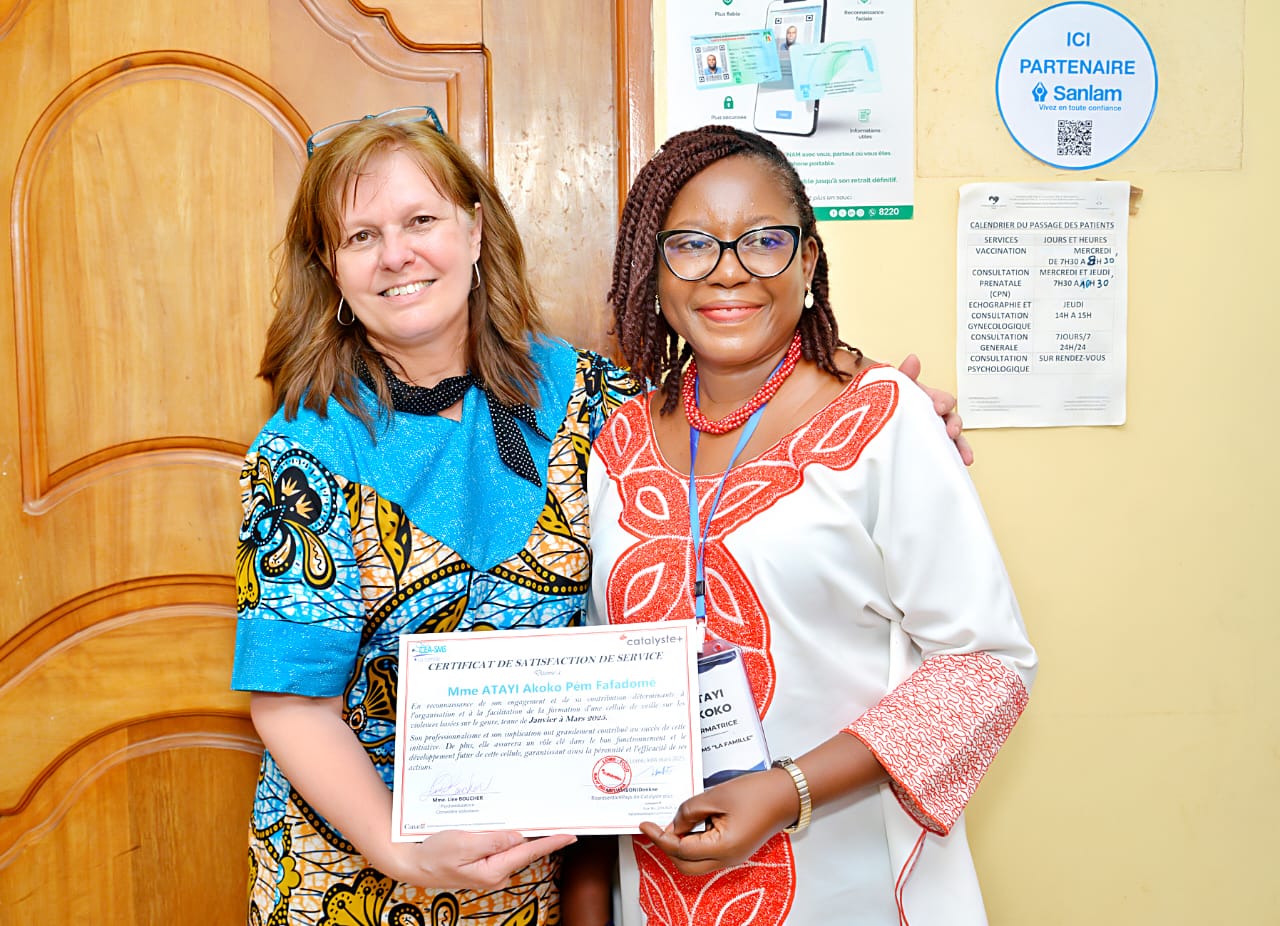
Ms. Akoko Irène Atayi (right), Director of FOFAVI-Togo CEA-SMS La Famille (Fédération des Organisations Féminines d’accueil des Volontaires Internationaux), and Line Boucher (left) at the training certificate presentation ceremony.
Catalyste+ entered her path somewhat unexpectedly. After seeing a colleague’s social media post featuring an assignment and a link to the Catalyste+ website, Line quickly became interested in the organization. Soon after, she announced at her retirement party that she would be leaving for West Africa—launching an active retirement and answering her desire for intellectual stimulation, meaningful work, and new challenges.
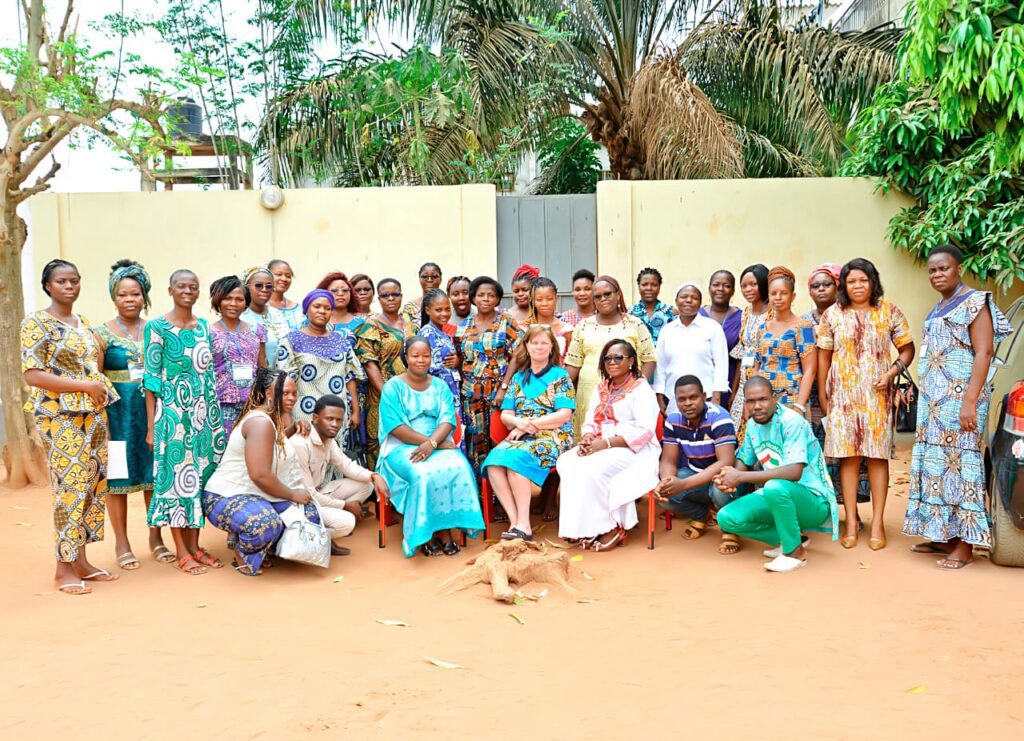
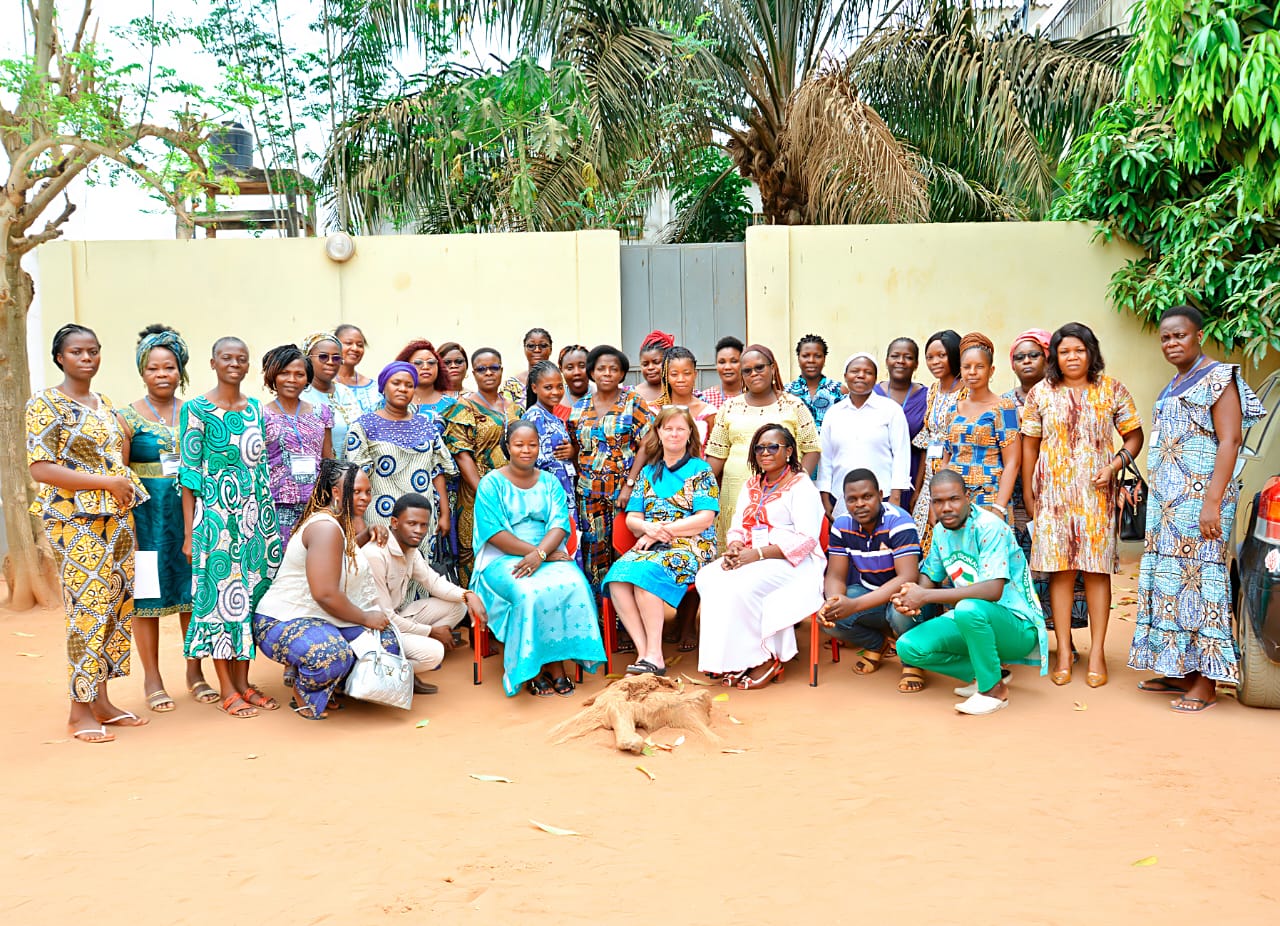
Without hesitation, Line embraced this new chapter. Drawing on her extensive travel experience, her professional expertise, her openness, and her adaptability, she felt confident in her ability to meet the needs expressed by the partner organization. During her first assignment in Lomé, Togo, she supported a medical clinic offering psychosocial services and trained three teams of ten people each, to tackle gender-based violence (GBV). These teams are composed of women from the community, including seamstresses and teachers, who help screen and support victims of GBV. This structure helps women feel more comfortable speaking openly about their experiences with trusted peers from the community. Line developed a strong relationship with the clinic’s director, and together, they carried out two additional virtual assignments—one focused on reviewing the initial assignment through feedback and lessons learned to identify what worked well and what could be improved, and the other focused on implementing a comprehensive intervention program to prevent GBV and promote women’s empowerment.
These assignments offered Line a wide range of experiences, beginning with cultural discovery. She encountered West Africa for the first time—its landscapes, heat, demands of daily life, vibrant markets, and colorful fabrics. She also experienced the warm welcome of the medical staff she worked with and was deeply moved by their strengths: their willingness to share, their curiosity, their commitment, and their determination to improve their community’s well-being. This immersive experience allowed her to move beyond stereotypes and build genuine connections—far beyond what traditional travel could offer.
Professionally, her work on GBV in Togo exposed her to realities that differed from those she encountered throughout her career—some of which challenged her values. She highlights the different ways in which violence is expressed, the limited role of women in a strongly patriarchal and traditional society, their restricted financial autonomy, and the absence of a formal social safety net. Rather than discouraging her, these realities pushed her to adapt her approach and materials, presenting a challenge that both stimulated her and expanded her perspective.
One example of her volunteer experience that allowed her to use her adaptability was creating therapeutic storytelling tools. To respect the local oral tradition, adapt to varying education levels, and foster trust while gently encouraging dialogue, she developed three stories—each tailored to individuals affected by violence: women, men, and children. Each story takes place in a Togolese setting and features a main character with a meaningful local name, such as Fafa, which means “peace.” Through these narratives, she illustrated the impact of violence within families through the perspective of the child, the mother, and the father. She integrated theoretical concepts and symptoms into the stories and included reflective questions to encourage discussion, such as: “When you hear noises or screams, what do you think in your head and what do you feel in your body? When something upsets you, are you able to talk about it?” These stories became tools to reinforce training content and later served as intervention resources for community watch groups supporting and preventing violence.
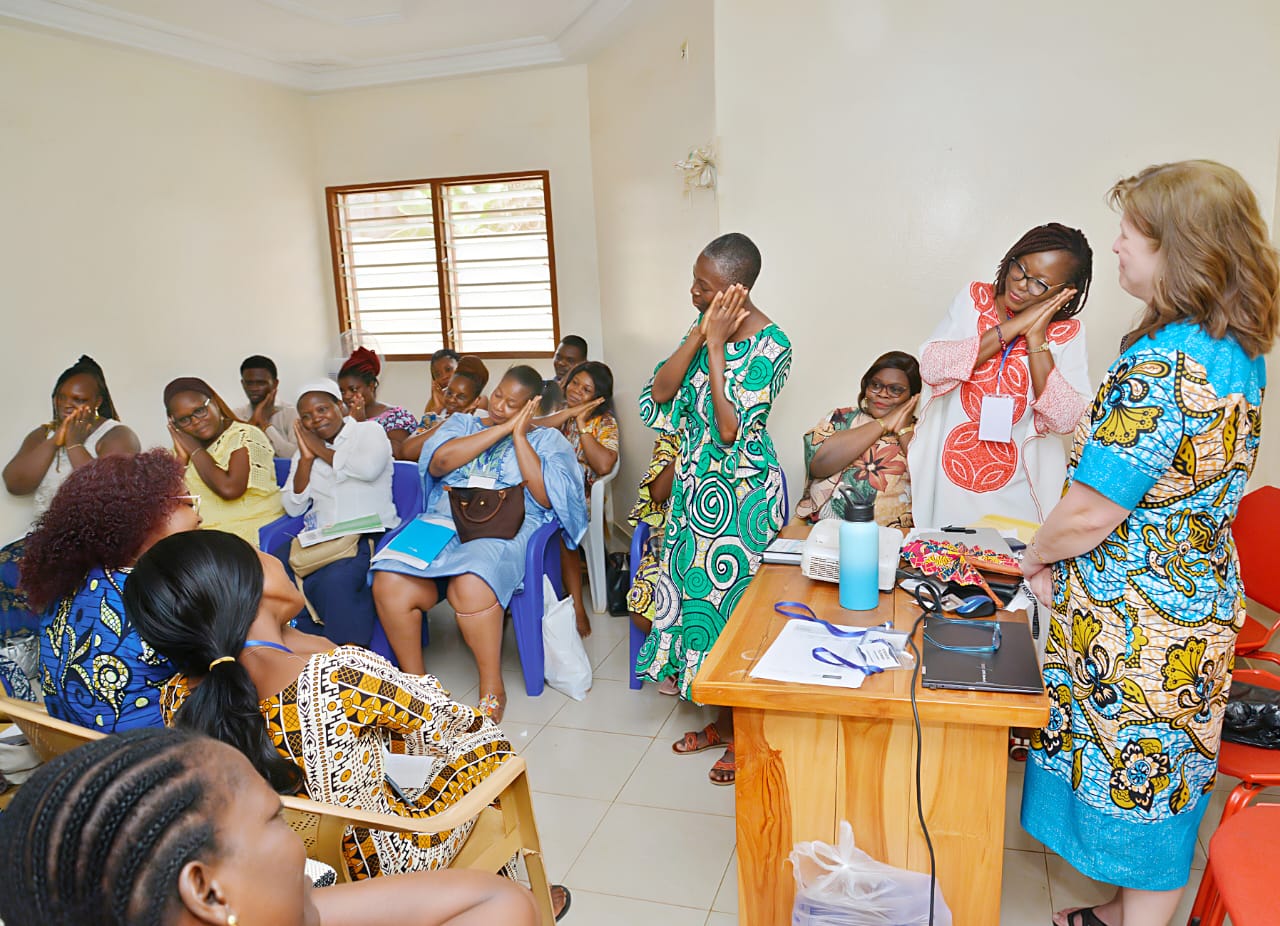
CEA-SMS la Famille, alongside the government and partner organizations, contributes to combating various forms of gender-based violence in Togo, primarily through prevention, protection, and support for victims of gender-based violence (GBV).
Through these assignments, Line applied her ethnocultural knowledge in practice and moved beyond simply transmitting knowledge to actively strengthening the capacity of a team. She emphasizes that interpersonal skills are essential for any successful assignment and believes it is crucial to approach such work as a guest, acting with humility, sensitivity, respect, and care. When women told her they had been ignorant before her arrival and thanked her for sharing her knowledge, Line responded: “You were not ignorant; I simply helped put your knowledge into words and structure it.”
Line takes pride in Canada’s investment in international cooperation and witnessed the direct, tangible impact of her work in this neighborhood of Lomé. These experiences deeply transformed her perspective, reinforcing her commitment to participatory approaches and reshaping how she defines effective support. Catalyste+ left her with a strengthened sense of purpose and a renewed understanding that meaningful impact comes from recognizing and elevating the knowledge that already exists within communities.